
 Blogs
Blogs 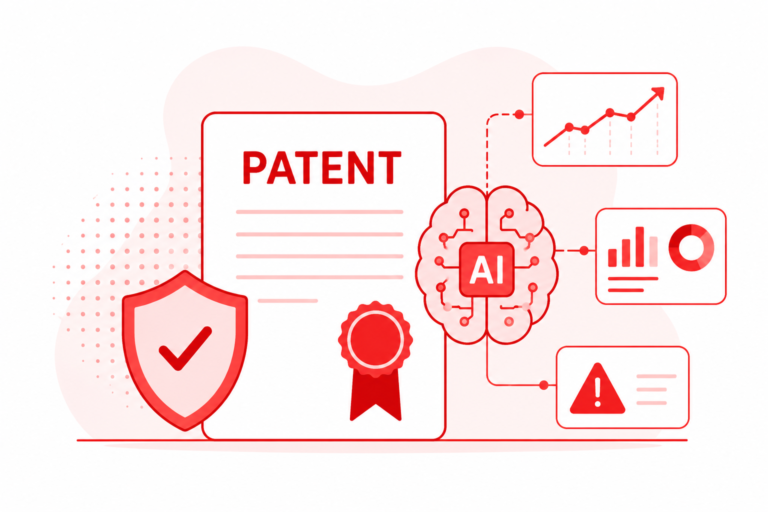
InsightFinder holds exclusive patents covering anomaly detection, root cause analysis, and automated remediation; three capabilities most reliability tools still leave to humans. This post explains what each patent does, how they work together inside the InsightFinder platform, and how that helps deliver better reliability.
Most observability tools are built on a broken premise
Your monitoring stack fires an alert. Your on-call engineer wakes up at 2 a.m., opens five dashboards, and starts hunting. After correlating logs, metrics, and traces by hand, they find the root cause about an hour later. By then, customers have already noticed.
This is the standard and fundamentally flawed playbook for incident response. It assumes problems announce themselves before they become outages. But any seasoned engineer knows that they don’t. Traditional observability tools are built to help you understand what already went wrong. Many of them do that reasonably well. What they can’t do is tell you what’s about to go wrong, why it’s happening across a distributed system, or how to fix it without human intervention.
InsightFinder was built on an entirely different premise. Most reliability problems are predictable. The patterns that precede incidents exist in your data before the incident happens. The question is whether your tooling can see them (and act on them!). That’s why InsightFinder developed a combined set of patented AI techniques that collectively form the Unified Intelligence Engine (UIE): a purpose-built system for predicting failures, isolating root causes, and automating remediation in ways that no dashboard-and-alert approach can replicate.
These aren’t incremental improvements on existing ideas. They’re granted patents on novel approaches to problems the observability industry has largely accepted as unsolvable.
Predicting failures before they happen
The foundation is Unsupervised Behavior Learning (or UBL) — a system and method for predicting performance anomalies in distributed computing infrastructures.
The core insight is that you don’t need labeled training data to know when a system is behaving abnormally. UBL builds a model of what “normal” looks like for each machine in your infrastructure, based entirely on unlabeled, real-world metric data. From there, it compares real-time telemetry against that model, detects deviations, and predicts future failures based on patterns of consecutive anomalies over time.
When a failure prediction triggers, UBL doesn’t just raise a generic alarm. It produces a ranked list of the specific system-level metrics contributing to the predicted failure. Your team knows exactly where to look, before the system goes down.
Most anomaly detection tools work by comparing current values against static thresholds. That approach generates noise by design: thresholds that are too tight flood you with false positives; thresholds that are too loose miss real problems. UBL sidesteps the threshold problem entirely by learning what normal looks like dynamically, per machine, and flagging deviations from that learned baseline. The model uses a self-organizing map architecture, which adapts continuously as system behavior evolves.
For SREs managing distributed infrastructure, the implication is significant: you’re no longer chasing anomalies after they’ve cascaded into incidents. You’re seeing the precursors.
Finding root cause across a distributed system
Knowing something is wrong is only half the problem. In a distributed system, the component that fails is rarely the component that caused the failure.
Let’s say that a slow database query degrades an upstream API. That API degrades a frontend service. Then, the frontend service starts throwing errors. Your alert fires on the frontend. The problem started two hops back.
InsightFinder’s Root Cause Analysis patent is a system and method for online unsupervised event pattern extraction and holistic root cause analysis for distributed systems. The methods in that patent directly address this problem.
The system ingests data from heterogeneous sources simultaneously: system-level metrics, system call traces, and free-form or semi-structured log data. It extracts event patterns in real time, identifies which events recur, and then does something the typical correlation engine can’t: it distinguishes between correlation and causality. Not just “these two things happened at the same time,” but “this thing caused that thing.”
From that causal analysis, the system pinpoints the actual root cause and also estimates the impact scope of the anomaly (i.e. which services are at risk and how far the blast radius extends) and raises early alarms about impending degradations. You get root cause and blast radius together, in real time, before an outage fully materializes.
That matters because most observability platforms aggregate data and surface it to humans for interpretation. The human analyst receiving that signal still has to form a hypothesis about causality. InsightFinder’s RCA engine forms that hypothesis automatically, across the full system graph, without requiring predefined dependency maps or manual correlation rules.
Closing the loop with automated remediation
Prediction and diagnosis are valuable. But if your response still requires a human to read an alert, open a runbook, and execute a fix, you haven’t solved the latency problem. All you’ve done is moved the goal post.
Our Auto-Remediation patent is a system and method for AI-driven automated incident prevention for distributed systems. It takes the output of anomaly detection and root cause analysis and connects it to actions.
The system extracts patterns from historical incident data: not just what broke, but what was done to fix it. Using natural language processing alongside machine learning, it learns from past incident reports, classifies new incidents against known patterns, and applies previously successful remediation techniques automatically. Each remediation attempt is annotated back into the system, which continuously improves its classification accuracy over time.
The result is a closed feedback loop. InsightFinder detects the early warning signs, identifies the root cause, matches the pattern to a known incident class, and applies the appropriate fix. All of that happens without waiting for a human to wake up and read a runbook. For incidents that fall outside known patterns, it surfaces the diagnosis with enough specificity that human response time drops dramatically.
This is a meaningful shift from how most AIOps and observability platforms handle remediation, which typically means surfacing a suggested action in a UI for a human to approve. Approval workflows have their place, but they still impose human latency on a problem that’s actively degrading your service.
Why these patents matter
Software patents get a mixed reception, and understandably so. But in this context they carry specific weight: they document that the techniques underlying InsightFinder’s core capabilities were novel enough (and mechanically well-defined) to survive the scrutiny of the patent office. These aren’t marketing claims. They’re legally examined descriptions of how the system actually works.
More practically, they represent years of research that can’t be replicated by bolting an LLM onto a log aggregation platform. Many observability vendors are doing exactly that; wrapping existing data pipelines in generative AI interfaces and calling the result “AI-driven observability.” They’re solving a presentation problem, not a prediction problem. They still rely on threshold-based alerting for detection, manual or rule-based correlation for root cause, and human judgment for remediation.
InsightFinder’s approach is architecturally different. UIE was designed from the ground up to predict failures before they occur, reason about causality across system boundaries, and automate the response. Our patents cover each of those capabilities. You can read the full technical detail behind each one on the InsightFinder patents page.
The reliability gap is a tooling problem
SRE teams aren’t failing because they lack talent or diligence. They’re failing because the tools they rely on are fundamentally reactive. Alerts tell you a problem exists. Dashboards help you investigate it. Runbooks tell you what to try. Every step in that chain depends on a human being available, alert, and fast.
InsightFinder was built on the premise that this chain is the problem, and that the fix requires purpose-built machine learning at every link: detection, diagnosis, and response. These patents are evidence that our approach is genuinely different. Those differences are fundamentally different technology.
If your current reliability tooling is still waking people up to do work that a well-trained model could do, it’s worth asking whether the tooling or the premise needs to change. Schedule a demo if you’d like to see how this would work in your environment.


